How to Choose Between Decorative and Functional Lighting

Time:2026-11-23 Author:Ethan
0%

A room can feel welcoming yet still leave a book in shadow. That tension sits at the heart of choosing decorative and functional lighting. If you have asked “what is the difference between decorative and functional lighting,” the short answer is purpose: decorative fixtures shape mood and visual identity, while functional lighting supports tasks such as reading, cooking, or working. In practice, one fixture may do both. A pendant can become a focal point and illuminate a dining table—but only if its brightness and placement suit the job.

Energy use makes the choice more than aesthetic. The International Energy Agency’s 2023 Global Status Report for Buildings and Construction says buildings account for about 30% of global final energy consumption. That figure covers more than lighting, but it puts everyday design decisions in context. The U.S. Department of Energy says residential LED products use at least 75% less energy than incandescent lighting and can last up to 25 times longer. Efficient choices matter. Still, efficiency alone cannot make a room comfortable.

A useful plan starts with what people actually do in each space. Consider a focused, glare-controlled light over a kitchen counter, then softer wall or pendant lighting for atmosphere. Check brightness, color appearance, dimming compatibility, and fixture placement before buying. The details are easy to overlook. I have seen a beautiful fixture disappoint when it throws light onto a wall instead of the work surface. This guide explores how to balance appearance, usability, and energy performance, while recognizing that no single lighting formula fits every room.
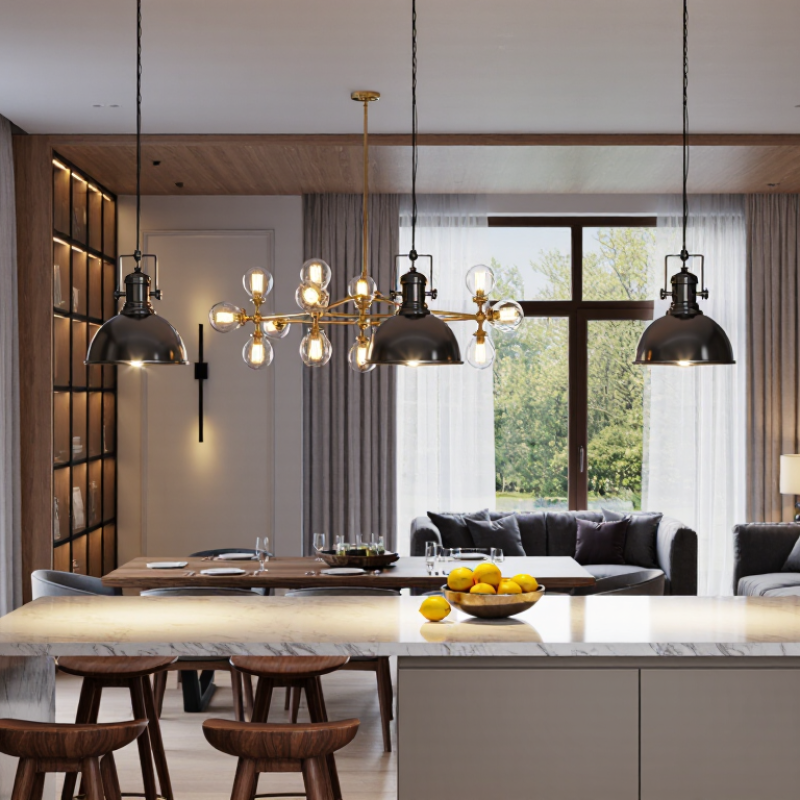
How to Choose Between Decorative and Functional Lighting

Define the Lighting Task: EN 12464-1 Recommends 500 lx for Office Work

For office work, define the task before choosing decorative or functional lighting. EN 12464-1:2021 sets 500 lx maintained illuminance for writing, reading, and data processing. It also gives a UGR glare limit of 19 and a minimum colour rendering index of Ra 80.

These are design targets, not a promise that every point on a desk will measure exactly 500 lx.

Measure at the desk. Check the actual work surface, not just the lamp’s output or the room’s centre. The standard also sets 300 lx for the immediate surrounding area and 100 lx for the background, helping avoid an abrupt bright-to-dark contrast.

The UNEP and GlobalABC 2023 Global Status Report notes that buildings use about 30% of global final energy. That wider figure is a reminder to avoid lighting empty areas unnecessarily. A focused desk light can support a task, while softer ambient light handles the room.

But placement matters: a bright pool can create glare on a screen or leave a colleague in shadow. I’d test the setup during real work, then adjust it. Measurements help; they do not replace judgment.

Layer Ambient, Task, and Accent Light to Meet Each Room’s Needs

Think of each room as three overlapping jobs: seeing, doing, and noticing. Ambient light sets the overall level; recessed fixtures, ceiling lamps, or bounced light can soften deep shadows. Task lighting belongs where work happens: a shaded lamp beside a reading chair, or a focused fixture above a kitchen counter. Accent light draws attention to a framed print, a textured wall, or a plant. Start with the room. Then add control. Separate switches or dimmers let one space shift from weekday chores to a quieter evening without changing every fixture.

Choose bulbs and placement with comfort in mind, not just appearance. A bright bare bulb can glare across a polished table, while a desk lamp aimed at paper reduces hand shadows. The U.S. Department of Energy’s Energy Saver guidance reports that LEDs use at least 75% less energy and last up to 25 times longer than incandescent bulbs. That supports using efficient light sources, but efficiency alone does not guarantee good lighting. Check the light’s color and beam in the actual room; paint and fabric can look different after dark. It is easy to over-light a display shelf. A softer accent may feel calmer, though sometimes less dramatic. Keep the layers adjustable, and let the room’s real routines guide the final balance.

Layer light for comfort and function. These illustrative targets, in lux, show why task areas often need brighter light than general room lighting. Add accent lighting to highlight features; a common design guideline is to make an illuminated feature about three times brighter than its surroundings. Actual needs vary with room finishes, daylight, and personal preference.

Compare Decorative and Functional Fixtures by Beam, Glare, and Light Output

Decorative fixtures shape a room, but their beam still affects comfort. A shaded pendant may spread soft light across a dining table, while a clear bulb can create a bright spot in the eye. Look at the beam angle and where the light lands, not just the fixture’s appearance. A wide beam suits general ambience; a narrow beam highlights a shelf or artwork. That distinction can blur.

Functional fixtures should deliver light to a specific surface. For reading, check the lamp’s output and aim it toward the page, not your face. Lumens describe total light from the source, but they do not show how much reaches a desk. Beam angle, mounting height, and shade design also matter. A narrow beam may feel bright in one spot while leaving nearby areas dim.

Glare is easy to underestimate in a showroom. At home, a bare bulb reflected in a monitor or glossy countertop can become distracting. Try viewing the fixture from seated and standing positions, then check the light on the actual task area. A dimmer can help, though it cannot correct a poorly aimed beam. I still find that a fixture that looks balanced in a catalog may feel harsh beside a pale wall. Test before settling.

Check Color Quality: ENERGY STAR Uses CRI 80 as a Common Minimum

Color rendering matters when choosing between decorative and functional lighting. The color rendering index, or CRI, estimates how naturally a light source shows colors compared with a reference source. A CRI of 80 is a common minimum in efficiency-focused lighting criteria. It can work well for hallways, storage areas, and many everyday rooms. But “acceptable” does not always mean flattering.

Consider a warm pendant above a dining table. At lower CRI, tomato sauce may look dull, and skin tones can seem slightly gray. In a work area, that shift may make fabric, paint, or food harder to judge. CRI 80 is a useful starting point, not a guarantee. It also says nothing about brightness or whether the light feels warm or cool. Check those details separately. If color accuracy matters, compare bulbs or fixtures in the room where they will be used. Look at familiar objects in daylight and under the installed light. Small differences show up. I have found that a sample viewed in a store can look quite different at home; room surfaces and dimmers complicate the picture. Higher CRI may help, but it cannot fix poor placement or harsh glare.

Balance Style and Efficiency: LEDs Use at Least 75% Less Energy Than Incandescents

Choosing between decorative and functional lighting starts with the job each fixture must do. A sculptural pendant can make a dining table feel inviting, but it may leave the corners dim. Add task lighting where detail matters, such as a focused lamp beside a chair or under-cabinet lights over a work surface. Think in lumens, not watts: lumens describe light output, while watts measure energy use.

Efficiency need not mean sacrificing atmosphere. The U.S. Department of Energy’s Energy Saver guidance reports that LEDs use at least 75% less energy than incandescent bulbs and can last up to 25 times longer. Choose warm-color LEDs for relaxed spaces and brighter, cooler light for tasks. Check the fixture’s dimmer compatibility before buying; an incompatible combination may flicker. A beautiful fitting can still be the wrong choice if its light is hard to control.

Tips: Layer ambient, task, and accent lighting instead of asking one fixture to do everything. Compare lumen output and estimated annual energy cost on product labels. Try the light in the actual room, too—paint and shade materials can change how it feels. My own planning would still leave room for adjustment.

FAQS

What lighting level is recommended for office work?

The recommended maintained illuminance is 500 lx for reading, writing, and data processing. Treat it as a design target, not an exact reading at every desk point.

Where should desk lighting be measured?

Measure the work surface, not just the lamp output or room centre. Check for screen glare and shadows during real work.

How bright should the areas around a desk be?

The guidance specifies 300 lx for the immediate surrounding area and 100 lx for the background. This helps reduce sharp bright-to-dark contrast.

What glare and colour standards apply to office lighting?

The recommended glare limit is UGR 19, with a minimum colour rendering index of Ra 80. Numbers help, but they cannot judge comfort for you.

What are the three useful layers of room lighting?

Ambient light illuminates the room, task light supports close work, and accent light highlights details. A desk lamp, ceiling light, and softly lit picture can serve these roles.

How can I avoid glare from a desk or dining lamp?

Aim a shaded lamp at paper, not toward your eyes or screen. Test it at night. A polished table may reflect more light than expected.

Are LEDs more energy efficient than incandescent bulbs?

LEDs use at least 75% less energy and can last up to 25 times longer. Still, efficiency alone does not ensure comfortable lighting.

How should I choose light colour and brightness?

Consider warm-colour light for relaxed spaces and brighter, cooler light for detailed tasks. Check lumens for light output, and test the bulb with your room’s paint and fabrics.

Why use dimmers or separate switches?

They let one room shift from chores to a quiet evening without turning on every fixture. Check dimmer compatibility first; otherwise, lights may flicker.

Can one fixture light an entire room well?

Often, one fixture leaves corners dim or makes a work surface too bright. Layer the light, then adjust it around your actual routines. I might still miss a shadow.

Conclusion

Choosing the right lighting begins with identifying what each space needs to support. For focused office work, EN 12464-1 recommends an illuminance level of 500 lx. A comfortable room often combines ambient light for general visibility, task lighting for activities such as reading or working, and accent lighting to highlight features. This layered approach can make a space both practical and inviting.

To understand what is the difference between decorative and functional lighting, compare how each fixture directs light, controls glare, and provides useful output. Functional fixtures prioritize visibility and comfort, while decorative fixtures also contribute to a room’s style. Check color quality as well: a CRI of 80 is a commonly used minimum for rendering colors clearly. LEDs can help balance appearance with efficiency, using at least 75% less energy than incandescent bulbs. The best choice meets the room’s needs without sacrificing the atmosphere you want.

Ethan

Ethan

Ethan is a seasoned marketing professional with a deep expertise in our company's innovative product line. With a passion for sharing knowledge and insights, he takes the lead in regularly updating our corporate blog, where he explores industry trends, product features, and effective marketing......