How to Maintain Decorative Lighting Systems Safely?

Time:2026-09-16 Author:Amelia
0%

Decorative lighting creates atmosphere, but it also introduces electrical, thermal, and mechanical risks. A loose connector, overloaded circuit, or damp cable may remain unnoticed until failure occurs. NFPA’s Home Fires Involving Electrical Distribution and Lighting Equipment report recorded an annual average of 32,620 U.S. home fires between 2015 and 2019. These incidents caused approximately 470 civilian deaths, 1,100 injuries, and $1.3 billion in direct property damage. The figures make routine inspection more than a cosmetic task.

This guide explains how to maintain decorative lighting systems through practical, repeatable checks. It covers LED strips, pendant fixtures, outdoor displays, transformers, dimmers, control units, and mounting hardware. The U.S. Department of Energy reports that qualified LED products can use at least 75% less energy and last up to 25 times longer than incandescent lighting. However, efficiency does not remove risk. A hot driver, flickering dimmer, brittle insulation, or blocked ventilation still needs attention. Small warning signs matter.

Good maintenance begins with documented experience and careful judgment. Inspect visible cables before energizing the system. Look for discoloration near terminals. Check whether fixtures remain firmly supported after vibration or seasonal changes. Outdoor installations require added attention to moisture entry and connector protection. Qualified personnel should isolate power before opening equipment. Local electrical requirements and manufacturer instructions must guide every repair. No checklist replaces professional evaluation. That is an uncomfortable limitation, but ignoring it creates false confidence. With scheduled inspections, clear records, and timely replacement, decorative lighting can remain attractive, dependable, and safer for users and property.
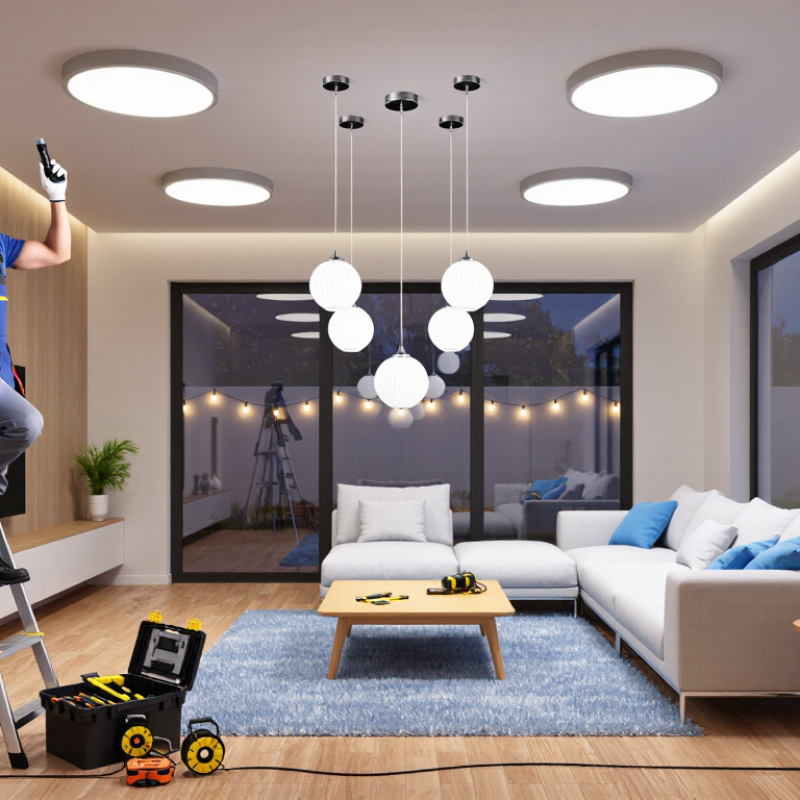
How to Maintain Decorative Lighting Systems Safely?

Understanding Decorative Lighting System Components and Risks

Decorative lighting systems combine more than visible bulbs. They include LED modules, drivers, transformers, cables, connectors, controls, mounting hardware, and protective enclosures. Each part affects safety. A weak connector can create heat, while an overloaded driver may flicker or fail. Moisture can enter outdoor fittings through cracked seals. Dust also collects around vents and raises operating temperatures.

During inspections, isolate the power before touching any component. Check for brittle insulation, darkened terminals, loose screws, and unusual buzzing. Look closely at cable entry points. They often suffer movement and water exposure. I have seen attractive installations hide poor cable support behind panels. That mistake is easy to overlook. A qualified electrician should test grounding, insulation, circuit loading, and protective devices. Follow the system’s technical instructions, even when the installation appears simple.

Tips: Keep a component record with installation dates and inspection notes. Replace damaged seals instead of adding temporary tape. Clean lenses with a dry, soft cloth. Do not place flammable decorations against hot fixtures. Test emergency shutoff access before maintenance begins. A checklist helps, but it is not perfect. Recheck areas that are difficult to see, especially ceiling voids and crowded junction boxes. Stop work when water, heat, or exposed conductors appear. Safety needs patience.

Inspecting Wiring, Fixtures, Supports, and Control Devices

Decorative lighting systems need more than a visual check. Begin with the wiring. Look for cracked insulation, flattened cables, loose terminals, and water marks near outdoor connections. Gently move each connector; unexpected movement may indicate a poor contact. Switch off and isolate the circuit before opening any enclosure. Never rely on a wall switch alone.

The fixture deserves equal attention. Check lamps, sockets, seals, and ventilation openings for heat damage or discoloration. A recurring field lesson is simple: the weak point is often hidden above eye level. Inspect mounting brackets, suspension wires, clamps, and anchor points for rust or bending. Supports must carry the equipment without stressing the cable. NFPA reported an estimated annual average of 32,620 home fires involving electrical distribution and lighting equipment from 2016 to 2020, causing about 470 civilian deaths and 1,100 injuries (NFPA, Home Fires Involving Electrical Distribution and Lighting Equipment, 2022).

Control devices also require testing. Confirm timers, dimmers, photocells, emergency controls, and residual-current protection operate correctly. Test them under normal load, not only during commissioning. Record unusual buzzing, flickering, delayed switching, or repeated trips. These signs should not be dismissed. NFPA 70B emphasizes documented electrical maintenance and condition-based inspection, but records are often incomplete in real facilities. That weakness deserves attention. A lighting log should include inspection dates, circuit identification, defects, corrective actions, and the person responsible. When a fixture is repaired, recheck its wiring and support together; fixing one part can disturb another.

How to Maintain Decorative Lighting Systems Safely? - Inspecting Wiring, Fixtures, Supports, and Control Devices

Inspection Area What to Inspect Safe Condition Recommended Frequency Corrective Action Safety Record
Power Isolation Confirm the correct circuit is identified before opening a fixture, junction box, or control enclosure. Supply is switched off, isolated, and verified de-energized with a suitable tester. Before every internal inspection or repair. Stop work if the circuit cannot be positively identified or isolated; contact a qualified electrician. Record the circuit identification, isolation point, date, and person responsible.
Wiring and Insulation Check cables for cuts, abrasion, heat damage, loose strands, exposed conductors, and deteriorated insulation. Insulation is intact, cables are protected from sharp edges, and no conductor is exposed. Visual check monthly and after relocation, impact, or water ingress. De-energize the circuit and replace damaged cable or insulation; do not use tape as a permanent repair. Document the defect location, cable section affected, and repair date.
Connections and Terminals Inspect terminal screws, connectors, junction boxes, strain reliefs, and signs of discoloration or overheating. Connections are secure, correctly enclosed, free of corrosion, and show no heat damage. Every six months and whenever flickering or abnormal heat is reported. Have a qualified person tighten, remake, or replace the connection using compatible components. Record observed symptoms, test results, and components replaced.
Fixtures and Lamp Holders Inspect housings, lenses, lamp holders, gaskets, fasteners, and ventilation openings for damage or contamination. Fixture is secure, clean, undamaged, properly ventilated, and suitable for its installation environment. Quarterly in public or high-use areas; annually in low-use areas. Replace cracked lenses, damaged holders, missing fasteners, or failed seals before returning the fixture to service. Record fixture location, defect classification, and service status.
LED Modules and Drivers Check for flicker, unusual noise, excessive heat, failed sections, loose driver mounting, and blocked airflow. Light output is stable, thermal paths are clear, and the driver is securely mounted with suitable ventilation. Quarterly and whenever brightness changes or flicker occurs. Remove faulty equipment from service and use a replacement with matching electrical ratings. Record symptoms, operating hours if available, and replacement specifications.
Supports and Mounting Examine brackets, suspension cables, chains, anchors, screws, ceiling points, and protective guards. No corrosion, cracking, deformation, looseness, excessive movement, or unsupported cable weight is present. Monthly visual check and detailed inspection every six months. Restrict access below the fixture if stability is uncertain; repair or replace structural hardware before use. Record the support type, visible condition, and any load or access restrictions.
Moisture and Environmental Exposure Look for condensation, water marks, corrosion, blocked drainage, and damaged weather seals. Enclosures and cable entries are sealed appropriately for the location, with no standing water or corrosion. Before seasonal wet weather and after storms, cleaning, or water leaks. Isolate affected equipment, dry and investigate the source, then replace compromised seals or parts. Record the source of moisture, affected equipment, and environmental repair.
Switches, Dimmers, and Timers Test switching, dimming, timing, enclosure condition, labeling, and signs of arcing or overheating. Controls operate smoothly, are clearly labeled, and remain within their rated electrical load. Every six months and after changes to the lighting load. Remove defective controls from service and have them tested or replaced by a qualified person. Record control settings, operational faults, and corrective work completed.
Sensors and Automatic Controls Check occupancy sensors, photocells, remote controls, control wiring, and programmed operating schedules. Sensors respond at the intended range and controls do not cause repeated cycling or unexpected energization. Quarterly and after software, layout, or control-setting changes. Correct alignment or settings; isolate and repair damaged control wiring or faulty devices. Record test conditions, response time, settings, and unresolved issues.
Earthing and Electrical Protection Verify protective earth continuity where required, accessible metal parts, circuit protection, and residual-current protection where installed. Protective devices are accessible, correctly identified, and tested in accordance with local electrical requirements. At scheduled electrical inspections and after alterations or faults. Do not bypass protective devices; arrange testing and repair by a qualified electrician. Record test date, test method, results, and any limitations.
Cleaning and Heat Management Remove dust, grease, insects, and debris from lenses, housings, vents, and heat sinks using appropriate methods. Surfaces are clean, ventilation is unobstructed, and cleaning has not damaged seals or finishes. Every three to six months, or more often in dusty or greasy environments. Isolate power before cleaning; replace components damaged by overheating or unsuitable cleaning products. Record cleaning date, method used, and any heat-related findings.
Operational Check Observe start-up, normal operation, dimming, switching, noise, odor, flicker, uneven illumination, and unexpected shutdown. System operates consistently without burning odor, buzzing, visible arcing, excessive heat, or intermittent failure. Monthly during routine facility checks and after maintenance. Switch off and investigate immediately if smoke, arcing, burning odor, or abnormal heat is detected. Record operating condition, fault symptoms, response taken, and final status.
Safety Note: Electrical testing, circuit alterations, protective-device work, and repairs involving energized equipment should be performed only by a competent person qualified under applicable local regulations. Always follow the equipment instructions and site isolation procedures.

Cleaning Decorative Lights Without Causing Damage

How to Maintain Decorative Lighting Systems Safely?

Cleaning decorative lights requires patience, not force. Turn off the power before touching any fixture. Let bulbs and metal parts cool completely. A warm glass shade can crack when wiped with a cool, damp cloth. I once noticed fine dust hiding around a socket, where careless cleaning could have pushed moisture inside.

Remove loose shades only when the instructions allow it. Place small screws in a shallow container. Use a soft, dry microfiber cloth for dust. For stubborn marks, lightly dampen the cloth with clean water. Never spray liquid directly onto the fixture. Keep moisture away from sockets, switches, seams, and electrical connections. Dry every surface before restoring power. Glass may look clean while its edges remain wet.

Tips: Use a stable step ladder, not a chair. Clean from top to bottom. Check for frayed wires, loose parts, darkened sockets, or cracked covers. Stop if you see damage. A qualified electrician should inspect electrical faults. Avoid abrasive sponges and strong chemical cleaners, since they can remove finishes or cloud clear materials. Test one hidden area first. My own cleaning routine is not perfect; I sometimes focus on visible surfaces and miss dust behind the fixture. A quick second inspection prevents that small oversight from becoming a safety problem.

How to Maintain Decorative Lighting Systems Safely?

Cleaning frequency should be adjusted to the environment and the fixture manufacturer’s instructions. Always switch off and isolate the power before cleaning, use a dry or slightly damp lint-free cloth, and prevent moisture from entering sockets, drivers, switches, or other electrical components.

Replacing Lamps, Drivers, Fuses, and Worn Components Safely

Decorative lighting needs more than visual inspection. Turn off the circuit before opening any housing, then verify that no voltage remains. A wall switch alone is not enough. For complex installations, a qualified electrician should isolate and secure the supply. Record the lamp type, driver rating, fuse size, and replacement date.

Replace lamps with the correct wattage, base, voltage, and heat rating. Let hot lamps cool before handling them. Use clean gloves when touching sensitive lamp surfaces. A loose socket can create flickering, heat marks, or arcing. Stop work when insulation feels brittle or a cable shows exposed conductors. Small defects can become serious faults.

Drivers require careful matching. Check input voltage, output voltage, current, dimming method, and enclosure temperature. Never install a higher-rated fuse to stop repeated failures. The fuse protects the wiring, not just the lamp. Replace worn clips, seals, connectors, and cracked covers with compatible parts. Keep moisture away from open fittings.

Do not rush.

In practice, maintenance records are often incomplete. That is a weakness worth admitting. Photographing connections before removal can prevent mistakes, but photographs cannot replace testing. After repair, inspect cable strain relief, restore covers, and test the circuit under normal load. Watch for unusual noise, smell, heat, or delayed flickering during the first operating cycle. Shut it down if anything feels wrong.

Testing, Documenting, and Scheduling Routine Maintenance

Decorative lighting stays safe when maintenance is measurable, repeatable, and visible to the next technician. Start with a circuit-level inventory. Record each fixture’s location, wattage, driver type, control address, mounting condition, and last test date. The U.S. Department of Energy’s 2020 U.S. Lighting Market Characterization estimated that LEDs represented 48% of installed lamps. This shift makes driver heat, dimming faults, and connector integrity important inspection points. Use calibrated meters when qualified personnel are available. Never trust appearance alone.

Testing should follow risk, environment, and operating hours. Inspect outdoor systems after storms, washdowns, or unusual flicker. Check insulation, grounding, protective devices, seals, cable strain, and emergency isolation. NFPA 70B, 2023 edition, supports documented, condition-based electrical maintenance. Log measured values, defects, photographs, corrective actions, and retest results. A spreadsheet is acceptable. An incomplete spreadsheet is not. Set monthly visual checks, quarterly functional tests, and annual technical inspections. Adjust intervals using failure history. Some sites need shorter cycles. In practice, a missed cable gland can matter more than a dusty lens.

Tips: Give every fixture one asset ID. Photograph junction boxes before closing them. Record ambient temperature during driver tests. Keep rejected parts away from active stock. Review recurring failures honestly. A perfect schedule on paper may still miss rushed inspections. Have a qualified electrician verify electrical repairs and protective-device performance.

FAQS

What components belong to a decorative lighting system?

It includes LED modules, drivers, transformers, cables, connectors, controls, supports, and protective enclosures. Each part affects safety. A weak connector may overheat.

How should power be isolated before maintenance?

Switch off and isolate the circuit before opening any enclosure. Verify that no voltage remains. A wall switch alone is insufficient. Do not rush.

What wiring problems should an inspection identify?

Check for cracked insulation, flattened cables, loose terminals, darkened contacts, and water marks. Gently move connectors. Unexpected movement may indicate poor contact.

Which fixture details require close attention?

Inspect lamps, sockets, seals, lenses, and ventilation openings for heat damage or discoloration. Look above eye level. Hidden damage is easy to miss.

How can supports create lighting hazards?

Check brackets, suspension wires, clamps, and anchor points for rust, bending, or looseness. Supports must carry the fixture without pulling on the cable. Cable strain matters.

What signs suggest a control device needs testing?

Watch for flickering, buzzing, delayed switching, repeated trips, or unreliable dimming. Test timers, photocells, emergency controls, and protective devices under normal load.

How should lamps, drivers, and fuses be replaced?

Match wattage, voltage, base, heat rating, driver output, current, and dimming method. Use the correct fuse size. Never install a larger fuse to hide repeated failures.

What records and checks should follow a repair?

Record inspection dates, circuit identification, defects, corrective actions, and responsible personnel. Photograph connections before removal, but photographs cannot replace testing. Records are often incomplete. That weakness deserves attention.

When should maintenance stop immediately?

Stop when water, exposed conductors, brittle insulation, unusual heat, burning smells, or damaged seals appear. Restore covers and test the circuit carefully after repair. If anything feels wrong, shut it down.

Conclusion

This guide explains how to maintain decorative lighting systems safely by focusing on the equipment, connections, and conditions that affect reliable operation. It introduces common components such as lamps, drivers, wiring, fixtures, supports, fuses, and control devices, while highlighting risks including loose connections, overheating, moisture, physical damage, and unstable mounting. Regular inspections can identify early warning signs before they develop into safety or performance problems.

The article also describes safe cleaning methods that protect finishes, lenses, and electrical parts from damage. It outlines careful procedures for replacing lamps, drivers, fuses, and other worn components, including isolating power and using compatible replacement parts. Finally, it emphasizes functional testing, maintenance records, and scheduled inspections. By following these practices, property teams can improve lighting performance, extend equipment life, and create a consistent process for how to maintain decorative lighting systems responsibly.

Amelia

Amelia

Amelia is a seasoned marketing professional with a wealth of expertise in our company’s core offerings. With an unwavering passion for driving growth and innovation, she plays a pivotal role in shaping our marketing strategies and enhancing brand visibility. A key aspect of her responsibilities......