How to Layer Decorative Lighting in a Room?

Time:2026-11-16 Author:Henry
0%

A room can look finished in daylight and feel strangely flat after sunset. The difference is often not another bright ceiling fixture, but several gentle sources working together. Learning how to layer decorative lighting in a room means balancing ambient light, task light, and accents without making the space feel like a showroom. Picture a warm pendant above the dining table, a shaded lamp beside the sofa, and a small picture light grazing a framed print. Each source has a job. Together, they create depth, guide the eye, and make ordinary corners feel considered.

Residential lighting designer and author Randall Whitehead has called lighting “the magic ingredient that makes or breaks a space.” That idea is useful, but it is not a formula. A beautiful lamp can still cause glare; a dim corner may need a floor lamp, not another ceiling fitting. Start by noticing how you use the room, where shadows fall, and which details deserve attention. Then choose fixtures with compatible color temperatures and controls, and test them after dark. Small changes matter. A lamp moved a few inches can soften a harsh patch on the wall. Yet there is no perfect arrangement for every home, and a plan may need revision once the furniture is in place. The guide ahead explores practical ways to combine fixtures, avoid common mistakes, and build a layered effect that feels warm, useful, and genuinely yours.
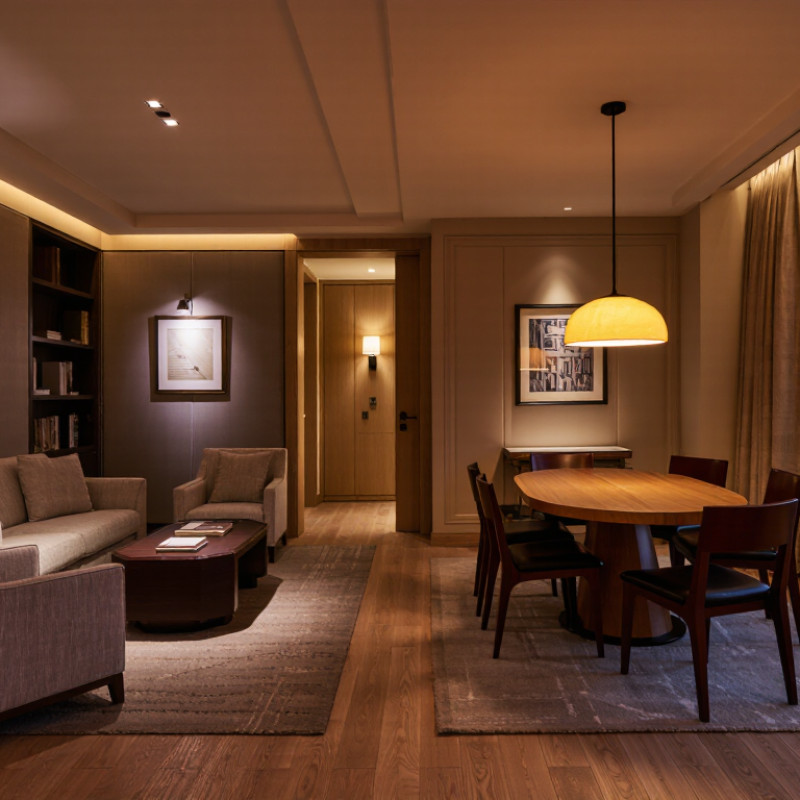
How to Layer Decorative Lighting in a Room?

Assess the Room’s Layout, Function, and Existing Light

Before choosing decorative lights, map the room’s shape and the way people move through it. Note low ceilings, deep corners, reflective surfaces, and places where furniture blocks a clear path. Start with observation. A narrow console may suit a small lamp, while a broad, empty wall can support a pair of sconces. Keep walkways and door swings in mind, especially when placing floor lamps or cords.

Then consider what each area needs. A reading chair benefits from a focused pool of light, while a dining table often feels more comfortable with a softer glow nearby. Look at the light already present during both daytime and evening. Stand in the room after sunset and note where shadows collect. Notice the shadows. A ceiling fixture may brighten the center but leave a bookcase or hallway dim; adding decorative light there can improve balance without making every corner equally bright.

Check the existing bulbs and controls before adding another fixture. Different color temperatures can make adjacent areas feel oddly disconnected, and a bright lamp may compete with television viewing or conversation. Dimming helps, but it does not solve every placement problem. A quick sketch can miss how light changes against pale walls or dark curtains. Leave room to adjust: test a lamp in its intended spot for a few evenings before settling on the layout.

Establish a Balanced Layer of Ambient Lighting

Ambient lighting sets the room’s overall brightness, so build this layer before adding decorative accents. A ceiling fixture, recessed lights, or a pair of wall lights can spread illumination across the space. Choose sources that soften shadows rather than create a bright patch directly overhead. A translucent shade or indirect wall wash can help. Keep it comfortable.

Plan for the room’s real tasks, too. In a living room, aim for even light across seating and walkways, without washing out artwork or a television screen. In a dining area, a pendant can anchor the table, but it should not be the only source. Add a dimmer where possible, and check the light at different times of day. A warm color temperature often feels inviting, though very warm light may make some colors look dull. There is no single setting that suits every room.

Use several moderate sources instead of relying on one unusually bright fixture. As a practical starting point, compare the room’s size, ceiling height, and bulb output, then adjust after living with the setup. Stand in the doorway and notice dark corners or glare on glossy surfaces. I would not assume the first arrangement is right; lighting can look balanced on paper and feel uneven at night. Move a lamp, lower the brightness, and reassess.

Add Decorative Fixtures as Visual Focal Points

How to Layer Decorative Lighting in a Room?

Add Decorative Fixtures as Visual Focal Points

A decorative fixture can give a room a clear visual anchor. Think of a pendant above a dining table, a sculptural floor lamp beside a reading chair, or a pair of wall lights framing artwork. Each fixture should feel connected to the room, not simply placed wherever a socket is available. Keep nearby surfaces and furnishings simple enough to let its shape stand out. A little breathing room helps.

Scale matters. Over a small table, a broad shade may feel heavy; above a long table, one tiny pendant can look lost. As a practical guide, consider the furniture’s width and the ceiling height before choosing a fixture. Hang dining lights low enough to define the table, but high enough to preserve clear sightlines. The exact position depends on the room and the people using it.

Decorative light works best with softer layers around it. Add a floor lamp or shaded table lamp, then use dimmable bulbs where compatible with the fixture. This lets the focal point glow without making every corner equally bright. Watch how light falls on walls and objects; a shiny shade may create glare, even when it looks beautiful in a showroom. It can feel slightly off at first. Adjust the bulb, height, or nearby lighting, and judge the effect at night as well as during the day.

How to Layer Decorative Lighting in a Room? — Add Decorative Fixtures as Visual Focal Points

This illustrative plan for a 20 m² living room uses about 3,200 lumens of ambient light, 900 lumens of task light, and 800 lumens from decorative focal fixtures. The estimates are based on four 800-lumen lamps, two 450-lumen lamps, and one 800-lumen lamp. Use dimmers to balance the layers and let decorative fixtures stand out.

Combine Accent and Task Lighting for Depth and Function

Decorative lighting works best when it adds character without making everyday tasks harder. Start with a reliable task light, such as an adjustable lamp beside a reading chair or a focused pendant above a kitchen counter. Then add accent lighting to draw attention to a textured wall, a framed print, or a shelf of ceramics. A warm table lamp can soften a room’s edges, while a narrow beam can create a more defined highlight. Keep the light sources at different heights. This gives the room depth and helps prevent every corner from feeling equally bright.

Tips: Aim accent lights away from reflective glass. Use dimmers where practical. Keep task lights adjustable.

Switch on each layer at night and notice where shadows fall. A reading lamp should illuminate the page without shining into your eyes. Accent lighting should add contrast, not compete with the task light. I sometimes find a carefully placed spotlight still feels too sharp; moving it a few inches or angling it toward a pale wall can soften the effect. Choose bulbs with compatible color temperatures, especially when several fixtures share one view. Small mismatches can make a cozy room feel oddly patchy. Keep cords clear of walkways, and test the arrangement from your usual seat before settling on it.

How to Layer Decorative Lighting in a Room? — Combine Accent and Task Lighting for Depth and Function
Room Area Ambient Foundation Task Lighting Accent Lighting Placement Guidance Suggested Color Temperature Control Strategy
Living room seating area Ceiling fixture or several recessed downlights provide general illumination. Floor lamp beside a reading chair; table lamp near the sofa for close-up activities. Adjustable spotlight aimed at artwork or a textured wall. Place reading light to the side and slightly behind the reader to reduce glare on pages. Aim artwork lights so reflections are minimized. 2700–3000 K for a warm, comfortable atmosphere. Use separate controls for general, reading, and accent lights; dim each layer to suit the activity.
Dining area Dimmable ceiling lighting supports circulation and general visibility. Focused light over the table makes meals and tabletop activities easier to see. Wall sconces or a small picture light can highlight nearby art or architectural details. Center the pendant over the table. A common starting point is about 30–36 in (76–91 cm) above the tabletop, adjusted for fixture size and sightlines. 2700–3000 K for a warm dining mood. Put the table light on a dimmer and control wall accents separately.
Bedroom Soft ceiling or indirect lighting provides an even base layer. Bedside lamps or adjustable reading lights illuminate books without lighting the whole room. Low-level light can emphasize a headboard, artwork, or a shelving niche. Position bedside lights so controls are within reach. Shield bulbs from direct view when lying down. 2700 K is a comfortable choice for a relaxed evening setting. Use independent bedside controls and a dimmer for the ambient layer.
Kitchen island Ceiling lighting provides general illumination across the kitchen. Pendants or directional fixtures light food preparation and other counter tasks. Lighting inside glass-front cabinets or beneath shelves adds visual depth. Space multiple pendants evenly and keep them clear of primary sightlines. Provide task light without casting strong shadows on the work surface. 3000–3500 K for a clear, comfortable work area. Control island, general, and display lighting independently so the room can shift from work mode to evening use.
Home office Diffuse ceiling or indirect light reduces contrast across the room. Adjustable desk lamp directs light onto documents or the work surface. A softly lit bookshelf or background wall adds depth for video calls. Place the desk lamp opposite the writing hand when possible. Position screens to limit reflections from windows and fixtures. 3000–4000 K, selected for comfort and the type of work. Keep desk lighting separately switched; use dimming or adjustable output to balance it with screen brightness.
Hallway or entry Ceiling fixtures or wall lights provide safe, continuous circulation lighting. A console lamp can illuminate keys, mail, or other small tasks near an entry table. Wall washers or picture lights draw attention to artwork and architectural features. Space fixtures to avoid dark gaps, and aim accent beams carefully to prevent glare for people walking through the space. 2700–3000 K for a welcoming transition between rooms. Use a wall switch or occupancy control for general lighting, with accent lights on a separate circuit where practical.

Adjust Fixture Placement, Brightness, and Color Temperature

Layer decorative lighting by placing light where it is used, not just where a ceiling box happens to be. A shaded floor lamp beside a reading chair can soften the room, while a small table lamp adds a lower pool of light near the sofa. Keep fixtures at different heights; overlapping pools feel more comfortable than one harsh beam. Too much glare? Shift the shade or aim the bulb toward a wall.

Set brightness by task. As a practical starting point, test about 300 lux on a reading page, then dim it until the page is clear without washing out nearby artwork. The IES Lighting Handbook bases lighting guidance on visual tasks, rather than room labels alone. A light meter helps, though your eyes still matter. I sometimes find a measured setup feels too bright after dark.

Choose color temperature to suit the mood and use. Around 2700K–3000K often gives living rooms a warm, relaxed feel; a brighter task lamp can be slightly cooler. Check that all visible bulbs look consistent. ENERGY STAR’s LED guidance reports that certified LED bulbs use up to 90% less energy and last up to 15 times longer than incandescent bulbs, making dimmable LEDs a practical choice for layered fixtures. Verify dimmer compatibility before installation.

FAQS

What should I check before adding decorative lights?

Map walkways, door swings, low ceilings, and dark corners. Note where furniture blocks light.

How can I choose a useful spot for a lamp?

Place a small lamp on a narrow console, or a focused lamp beside a reading chair. Keep cords clear of paths.

How do I know where the room needs more light?

Check the room during daylight and after sunset. Look for dim bookcases, hallways, and areas where shadows collect. Shadows matter.

How can a decorative fixture become a focal point?

Hang a pendant above a dining table or place a sculptural floor lamp beside a chair. Leave nearby surfaces fairly simple.

How do I choose the right fixture size?

Compare the fixture with the furniture and ceiling height. A broad shade can overwhelm a small table; a tiny pendant may disappear above a long one.

How can I layer task and accent lighting?

Use an adjustable lamp for reading, then aim accent light at artwork, ceramics, or a textured wall. Keep the beams from competing.

How can I reduce glare from decorative lights?

Aim lights away from glass and shiny surfaces. Try changing the bulb, height, or angle toward a pale wall. Test it at night.

Why might several lights make a room feel uneven?

Different color temperatures can look patchy in one view. Check bulb compatibility and try each layer from your usual seat; the first arrangement may still feel off.

Conclusion

Learning how to layer decorative lighting in a room begins with understanding its layout, purpose, and existing light. Consider where people read, gather, or move through the space, and note any areas that feel too dim or overly bright. Build a comfortable foundation with ambient lighting that spreads light evenly, then introduce decorative fixtures—such as pendants or distinctive lamps—as visual focal points that complement the room’s style.

For greater depth and everyday usefulness, combine accent lighting to highlight architectural details or artwork with task lighting for activities such as reading or cooking. Pay attention to where each fixture is placed, how bright it is, and whether its color temperature feels warm or cool. Adjusting these elements together helps create a balanced atmosphere that is practical, inviting, and visually cohesive.

Henry

Henry

Henry is a dedicated marketing professional with a profound expertise in the company's offerings. With years of experience in the industry, he possesses an impressive understanding of the market dynamics and consumer behaviors that drive success. Henry is committed to sharing his insights through......