What Is Decorative Lighting?

Time:2026-10-16 Author:Ethan
0%

What is decorative lighting? It is lighting designed to enrich a room’s mood, character, and visual balance. Unlike task lighting, it does not only help you read, cook, or work. A sculptural pendant above a dining table, a softly glowing wall sconce, or a string of warm lights can become part of the room’s identity. These fixtures may provide useful illumination, but their main purpose is often emotional and aesthetic.

In practice, decorative lighting works best when appearance and performance support each other. I have seen a beautiful lamp fail because its glare made conversation uncomfortable. A dimmable fixture with a warm color temperature can make wood, fabric, and painted walls feel more inviting. Scale matters too. A tiny pendant may disappear above a large table, while an oversized fixture can dominate a small room. Materials also change the effect; frosted glass softens light, while polished metal creates sharper reflections.

Small choices matter.

Professional lighting design considers brightness, beam direction, color rendering, installation height, and maintenance. Reliable products should include clear electrical information and suit the intended location. Wet areas require appropriate protection, and installation should follow local safety requirements. Decorative lighting is not automatically practical, and practical lighting is not always attractive. That tension deserves attention. Some designs look impressive in photographs but feel harsh at night. Others seem modest yet create lasting comfort. Understanding what is decorative lighting means looking beyond decoration and judging how light performs in real daily life.
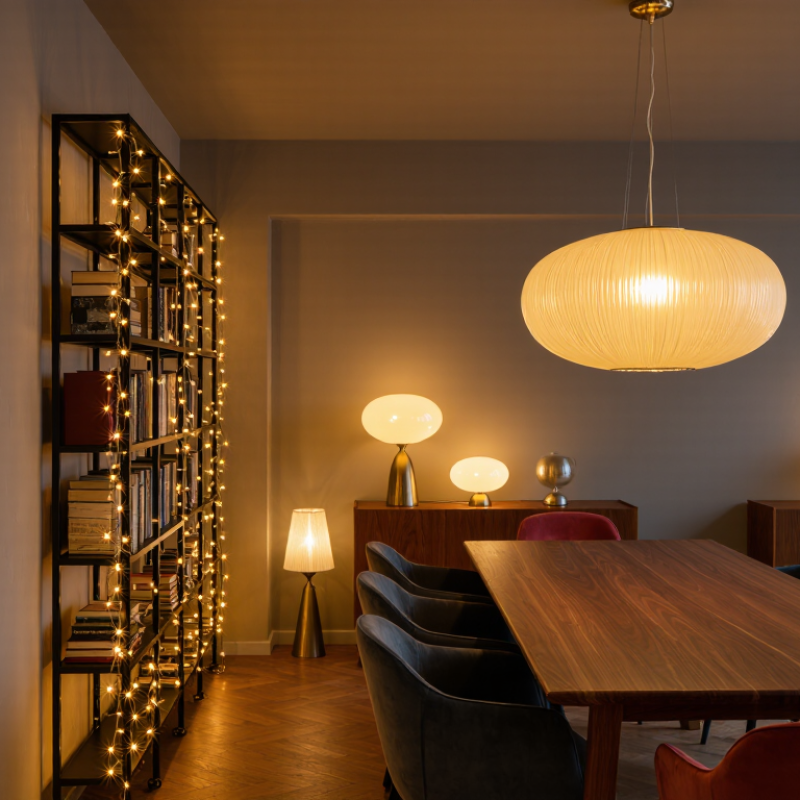
What Is Decorative Lighting?

Definition and Purpose of Decorative Lighting

What Is Decorative Lighting?

Definition and Purpose of Decorative Lighting

Decorative lighting is designed to add visual character, mood, and identity to an interior or outdoor space. Its purpose extends beyond basic visibility. A pendant above a dining table can create focus, while a softly lit wall can make a narrow hallway feel less severe.

Decorative fixtures may include pendants, sconces, chandeliers, table lamps, and concealed LED strips. Their materials, shapes, color temperatures, and light distribution influence how a room feels. The International Energy Agency reported in Energy Efficiency 2023 that lighting uses about 15% of global electricity. The U.S. Department of Energy also states that LED products use at least 75% less energy than incandescent lighting and can last up to 25 times longer. These figures support efficient decorative choices, but efficiency alone does not guarantee comfort.

In practice, designers should balance appearance, glare control, maintenance, and task needs. A sculptural fixture may look impressive, yet produce harsh shadows over a desk. That is a common design weakness. The best results often combine decorative light with ambient and task lighting. Still, personal preference matters, and not every room needs a perfect formula.

Tips: Choose dimmable sources, check the color temperature, and test light at eye level. Use warm white light for relaxed areas. Keep reflective surfaces from facing exposed lamps. A small mistake can change the entire atmosphere.

Main Types of Decorative Lighting

What Is Decorative Lighting?

Main Types of Decorative Lighting

Decorative lighting adds character while supporting everyday comfort. In practice, the best fixture balances appearance, brightness, scale, and safe installation. A beautiful light can still feel wrong when it creates glare or leaves a reading corner dim.

Pendant lights hang from the ceiling and suit dining tables, kitchen islands, and entryways. Choose a shade that directs light downward without blocking eye-level views. Chandeliers create a stronger focal point in dining rooms, stairwells, or high-ceilinged spaces. Their size matters. An oversized fixture may dominate the room rather than enrich it.

Wall sconces provide soft, vertical light beside beds, mirrors, and hallways. They can make narrow walls feel warmer. Table lamps and floor lamps offer flexible lighting for desks, sofas, and quiet corners. They are practical because their positions can change. Decorative string lights bring a relaxed atmosphere to bedrooms, patios, and sheltered balconies, but outdoor fixtures must have suitable weather ratings.

Color temperature also changes the mood. Warm white light often feels comfortable in bedrooms and living rooms, while neutral white can help with grooming or focused tasks. I have seen rooms look attractive in photos but uncomfortable at night. The problem was usually glare, not design. Check the bulb’s brightness, shield exposed light sources, and keep cords away from walkways. For fixed wiring, a qualified electrician should inspect the connection.

What Is Decorative Lighting? – Main Types of Decorative Lighting

Decorative lighting combines illumination with visual style. The chart compares commonly used decorative lighting types by their typical recommended color temperature for residential interiors.

Warm white light around 2700K is commonly used for relaxing spaces, while approximately 3000K provides a slightly cleaner appearance for task-oriented or contemporary settings.

Materials, Forms, and Design Features

What Is Decorative Lighting?
Materials, Forms, and Design Features

Decorative lighting combines illumination with visual character. Its materials shape both appearance and performance. Glass can soften brightness, while metal often creates sharper reflections. Wood, fabric, ceramic, and paper add warmth or texture. In real interiors, I have found that surface finish matters as much as material. A matte shade feels calm. A polished surface may produce distracting glare. The choice should support the room’s function, not only its photograph.

Forms guide how people experience light. Pendants draw attention downward, wall fixtures spread a gentle glow, and sculptural pieces can become focal points. Curved forms usually feel softer, while angular designs suggest structure. Scale is easy to misjudge. I once selected a beautiful fixture that looked crowded above a small table. It worked better in a larger room. Decorative lighting should also balance ambient, task, and accent light. Color temperature, shade density, and bulb position deserve careful testing.

Tips: View samples under daytime and evening conditions. Check the light from seated and standing positions. Reduce glare near screens and mirrors. Confirm heat management and electrical compatibility before installation. Follow local safety requirements, and consult a qualified professional when wiring is involved. Don’t trust appearance alone.

How Decorative Lighting Is Used in Interior Spaces

Decorative lighting shapes how interior spaces feel, not merely how they look. Pendant lights can gather attention above a dining table, while wall sconces soften a narrow hallway. A small lamp beside a reading chair creates visual comfort. These fixtures add rhythm, contrast, and personality without changing the room’s structure.

Placement matters more than decoration alone. Designers often layer ambient, task, and accent lighting. Decorative fixtures usually support the ambient or accent layer. A frosted pendant can spread gentle light across a kitchen island. A directional spotlight can highlight textured plaster or artwork.

The International Energy Agency reported in 2022 that lighting uses about 15% of global electricity.

Efficient light sources therefore matter, even in visually focused applications. Dimming controls and warm color temperatures can reduce glare and improve evening comfort.

Scale remains a frequent problem. An oversized fixture may dominate a small room, while a tiny pendant can disappear above a long table. I still see layouts where appearance wins over maintenance. Dust collects on open shades. Replacement becomes awkward.

The U.S. Department of Energy’s 2019 solid-state lighting forecast projected strong growth for LED adoption because of efficiency and longer service life. Yet efficiency does not excuse poor design.

Light should reach the right surface, at the right intensity, with minimal visual discomfort. Sometimes, a simpler fixture works better.

Factors to Consider When Choosing Decorative Lighting

What Is Decorative Lighting?

Decorative lighting adds character while supporting the room’s daily function. It may include pendant lights, wall sconces, table lamps, or illuminated shelves. The fixture becomes part of the interior, not merely a source of brightness. Its shape, finish, and light direction can influence how large or comfortable a room feels.

Factors to Consider When Choosing Decorative Lighting

Start with the room’s purpose and existing light levels. A dining pendant should illuminate the table without shining directly into people’s eyes. In a bedroom, a shaded wall light can create a softer effect than an exposed bulb. Scale matters. A small fixture may disappear above a large table, while an oversized one can make a narrow room feel crowded. Measure the ceiling height, furniture width, and available clearance before buying.

Light quality deserves careful attention. Warm white light often feels inviting, but very warm light can distort paint and fabric colors. Check the color rendering rating when accurate colors matter, especially near artwork or dressing areas. Dimmers are useful, but the fixture and lamp must be compatible. In bathrooms or covered outdoor areas, verify the appropriate protection rating and follow local electrical requirements.

Safety should not be treated as decoration.

Materials also affect maintenance. Dust collects quickly on open shades and textured surfaces. Glass may brighten a room, yet fingerprints become obvious. I sometimes prefer a less dramatic fixture after considering cleaning access. It is easy to choose for a photograph. Daily use is the real test. Test the light at night.

FAQS

What is decorative lighting designed to do?

It adds character, mood, and identity beyond basic visibility. A pendant can focus attention above a dining table.

Which fixtures are commonly used for decorative lighting?

Common options include pendants, sconces, chandeliers, table lamps, and concealed LED strips. Each fixture creates a different visual effect.

How do materials affect decorative lighting?

Glass can soften brightness, while metal may create sharper reflections. Wood, fabric, ceramic, and paper add warmth or texture.

How does fixture shape influence a room?

Curved forms often feel softer, while angular designs suggest structure. Wall fixtures spread gentle light, and pendants draw attention downward.

How can decorative lighting reduce glare?

Keep reflective surfaces away from exposed lamps. Test the light near screens, mirrors, and glossy furniture before final installation.

What color temperature works well in relaxed areas?

Warm white light usually feels comfortable in bedrooms, lounges, and dining spaces. Test it during evening hours, not only in daylight.

Should decorative lighting also support practical tasks?

Yes. Combine decorative, ambient, and task lighting for better comfort. A beautiful fixture may still cast harsh shadows over a desk.

How can someone choose the correct fixture size?

Check the fixture from seated and standing positions. I once chose a beautiful lamp that crowded a small table. It needed a larger room.

Are efficient light sources always comfortable?

No. Efficient lighting can still cause glare, shadows, or poor color quality. Dimming helps, but it cannot fix every design mistake.

What should be checked before installation?

Confirm heat management, electrical compatibility, and local safety requirements. Consult a qualified professional when wiring is involved. Appearance alone is not enough.

Conclusion

What is decorative lighting? It is lighting designed to enhance the visual character and atmosphere of an interior while also providing practical illumination. Unlike purely functional fixtures, decorative lighting contributes to a room’s style through its shape, color, texture, scale, and placement. It can serve as a focal point, create warmth, highlight architectural details, or support a specific mood.

Common types include pendant lights, chandeliers, wall sconces, table lamps, floor lamps, and accent fixtures. These designs may use materials such as glass, metal, wood, fabric, or ceramic, and may appear in forms ranging from simple geometric structures to artistic sculptural pieces. Decorative lighting can be used in living rooms, bedrooms, dining areas, hallways, and commercial interiors to add depth and personality. When choosing a fixture, consider the room’s size, ceiling height, existing décor, brightness needs, light color, energy efficiency, maintenance, safety, and installation requirements.

Ethan

Ethan

Ethan is a seasoned marketing professional with a deep expertise in our company's innovative product line. With a passion for sharing knowledge and insights, he takes the lead in regularly updating our corporate blog, where he explores industry trends, product features, and effective marketing......