Layr Light
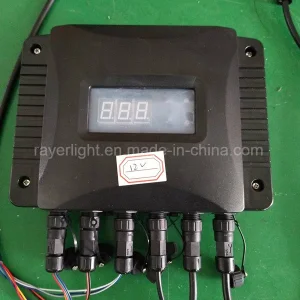
Pre-engineered control architectures designed for high performance and low-temperature durability.
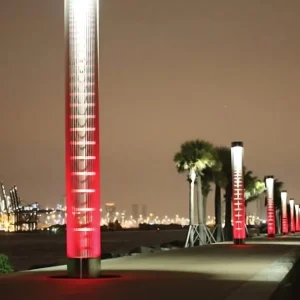
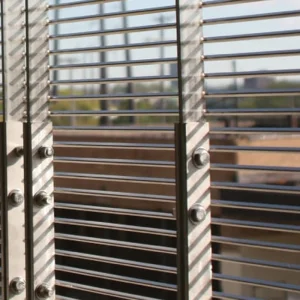
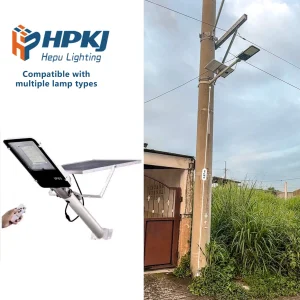
Over the past decade, urban landscapes across Russia have undergone an unprecedented transformation. From the historic façades of Moscow and St. Petersburg to the burgeoning commercial centers of Novosibirsk, Yekaterinburg, and Vladivostok, public and private lighting projects have shifted from basic illumination to highly sophisticated, programmable, and decorative lighting control systems. The modernization of municipal infrastructure under various urban development programs has accelerated the demand for smart, energy-efficient lighting solutions that can survive the harsh winter conditions characteristic of the Eurasian climate.
Unlike Western or tropical installations, decorative lighting control systems deployed in Russia must withstand severe environmental challenges. These include ambient temperatures dropping below -40°C, heavy snowfall accumulating on structural fixtures, ice loading on wiring and brackets, and significant power grid fluctuations. Consequently, the selection of lighting control equipment is not merely an aesthetic choice but a rigorous engineering decision. System architects and procurement officers must prioritize mechanical integrity, IP ratings (ingress protection against moisture and dust), thermal management, and reliable data transmission protocols.
Control systems must support extended low-temperature operations down to -45°C without signal degradation. Sub-zero environments can freeze standard electrolytic capacitors and degrade cabling insulation, requiring advanced solid-state controllers and specialized low-temperature outer jackets (such as polyurethane or silicone-based materials) for all connecting cables.
Russian municipal projects place heavy emphasis on architectural heritage preservation. When retrofitting historic buildings, lighting designers require control systems that can be integrated discreetly, avoiding damage to plaster and brickwork while providing high-resolution pixel mapping. In contrast, modern commercial districts require dynamic, high-intensity color-changing capabilities. Control protocols such as DMX512-A, RDM (Remote Device Management), Art-Net, and sACN (Streaming ACN) are widely utilized to manage thousands of individually addressable LED nodes from centralized control rooms. By implementing distributed control topologies with local data-processing hubs, contractors can ensure that a failure in one section of the network does not compromise the visual integrity of the entire building façade.
On a global scale, the decorative lighting industry is moving rapidly toward Internet of Things (IoT) integration and cognitive control. Lighting systems are no longer passive displays; they are integrated with ambient sensors, weather radar feeds, and smart city networks to adjust color temperature, brightness, and movement dynamically. In Western Europe and North America, strict energy codes (such as California Title 24 and EU Eco-design directives) drive the adoption of sophisticated dimming curves and scheduling. In Russia, while energy conservation is increasingly valued, the primary drivers remain structural reliability, low-maintenance requirements, and immediate visual impact.
All decorative lighting systems imported or manufactured for use in Russia must meet Eurasian Conformity (EAC) safety and electromagnetic compatibility (EMC) regulations.
Transitioning from local physical controls to remote monitoring systems, allowing operators to deploy animation updates from any location via secure cellular or fiber links.
Utilization of custom 868 MHz / 2.4 GHz spread-spectrum wireless DMX transceivers to bridge gaps where physical cabling is impossible due to architectural constraints.
While domestic production of structural steel posts, brackets, and basic luminaires is well-established in industrial centers like the Ural region and Moscow Oblast, high-density electronic controllers, DMX decoders, and dynamic driver modules are largely sourced from international manufacturing hubs. This creates a critical operational synergy between Russian engineering distributors and leading Chinese advanced electronics factories. The partnership ensures that Russian projects benefit from state-of-the-art semiconductor packaging, high-speed automated SMD line assembly, and extensive compliance testing, combined with local physical integration and commissioning support.
Ningbo Layr Light Co., Ltd. is a professional decorative lighting manufacturer specializing in custom LED lighting, architectural lighting systems, and smart lighting solutions for residential, commercial, hospitality, and public-space applications. Established in 2013, the company is located in Ningbo, Zhejiang Province, China, a major manufacturing and export center with convenient access to international shipping networks.
With a modern manufacturing facility covering more than 15,000 square meters and a team of over 220 experienced employees, Layr Light integrates product design, engineering, tooling, production, quality management, and global sales operations. The company operates advanced production lines and testing equipment to ensure reliable performance, energy efficiency, and compliance with international quality standards.
Layr Light offers a diverse portfolio of decorative lighting products and customized solutions, including architectural lighting fixtures, smart lighting systems, indoor decorative lighting, outdoor landscape lighting, hospitality lighting, commercial lighting, and project-based lighting designs. The company continuously invests in LED technology, intelligent control systems, and innovative design capabilities to meet the evolving needs of architects, designers, contractors, and brand owners worldwide.
As a trusted OEM and ODM manufacturing partner, Layr Light provides comprehensive customization services, including product development, private labeling, lighting project support, packaging design, and technical consultation. Its products are exported to North America, Europe, the Middle East, Southeast Asia, Australia, and other international markets.
Committed to innovation, quality, and long-term customer partnerships, Ningbo Layr Light Co., Ltd. focuses on delivering reliable decorative lighting solutions that combine aesthetics, functionality, and energy efficiency while supporting the success of customers in global lighting markets.
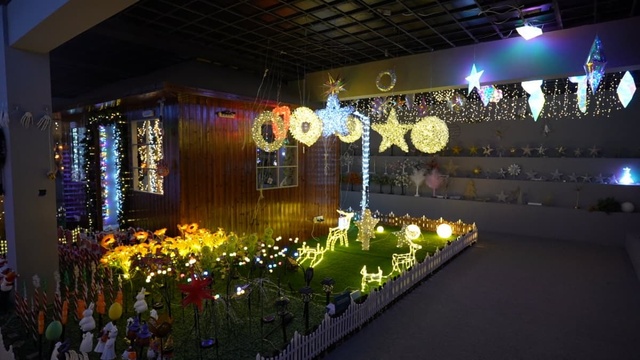
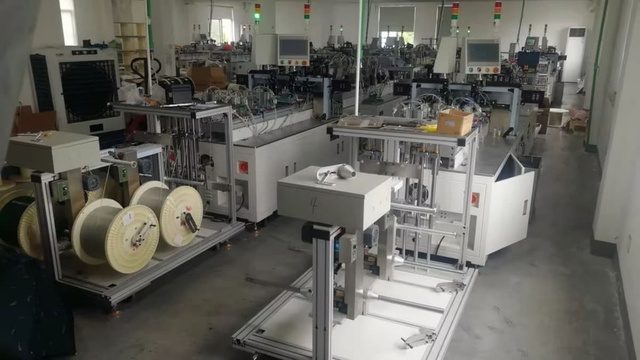
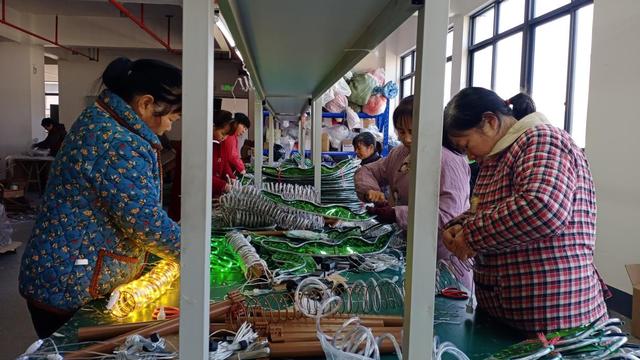
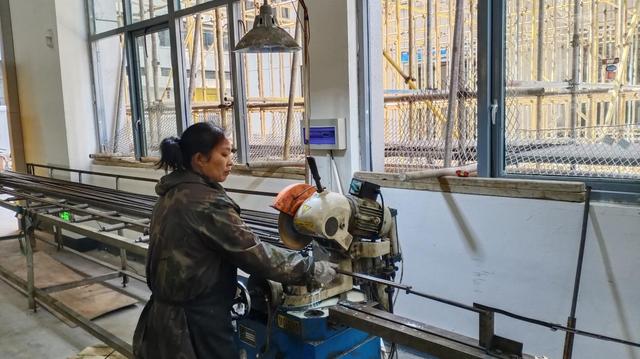
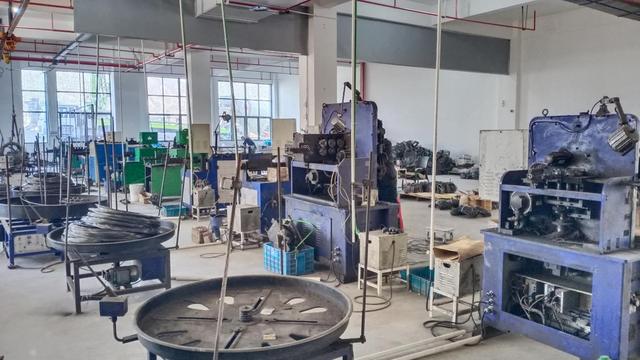
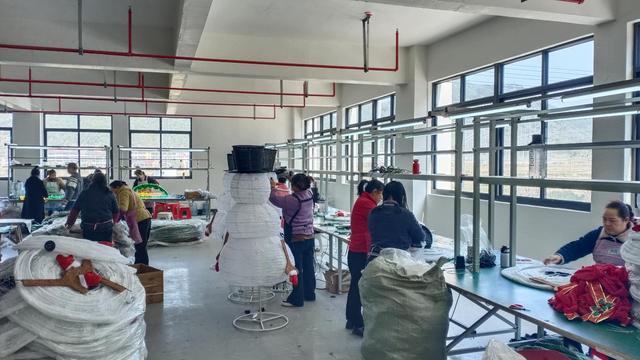
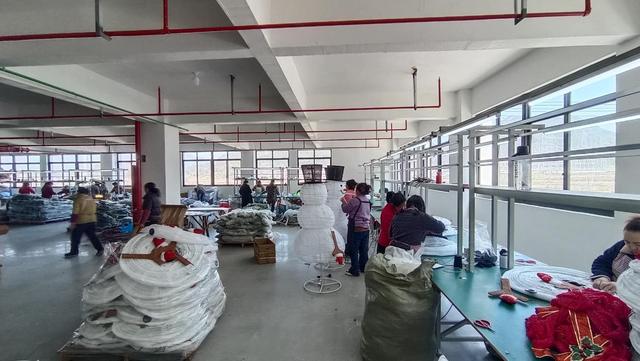


Sourcing advanced decorative lighting control systems directly from Ningbo, China, provides Russian engineering firms, municipal contractors, and commercial developers with a distinct competitive edge. The Ningbo industrial cluster contains an unparalleled concentration of component suppliers, testing laboratories, specialized silicon molding facilities, and circuit board manufacturers. This geographic density drastically shortens development cycles for custom ODM products—allowing design-to-prototype transitions in days rather than months.
Furthermore, China’s scale-driven raw material purchasing and highly automated assembly lines yield cost-efficiencies that are impossible to replicate in localized European or Russian workshops. For instance, high-speed Pick-and-Place machinery can populate complex DMX driver PCBs with absolute precision, mitigating the human error associated with manual assembly. This automated consistency directly impacts field reliability—reducing post-installation failures in high-latitude environments where replacement operations are physically challenging and costly.
Ningbo's proximity to the deep-water port of Ningbo-Zhoushan facilitates direct maritime routes to Saint Petersburg, Novorossiysk, and Vladivostok. Additionally, integration with the China-Europe Railway Express (New Silk Road) allows containerized cargo to travel overland to major land ports and cargo terminals in Moscow and central Russia within 14 to 20 days. This dual-route shipping framework mitigates logistics bottlenecks and guarantees stable lead times for seasonal holiday lighting deployments.
Working with an integrated ODM partner like Layr Light allows clients to customize core electronic architectures to meet localized grid demands. For example, voltage fluctuations in remote Russian districts require wide-input range power drivers (90-305V AC) with robust surge protection (up to 10kV line-to-line) to prevent controller burnouts. Chinese factories can easily integrate these heavy-duty electrical protections directly into standard control enclosures, providing a turn-key solution optimized for the specific challenges of the Eurasian power grid.
To fully understand the impact of custom control topologies, we must examine their deployment across specific physical scenarios common to Russia's municipal and commercial projects:
During Russia's extensive winter season, public squares, parks, and walking zones are illuminated with high-density decorative light patterns. Control systems in these scenarios must maintain synchronization across miles of cabling without signal lag. By utilizing isolated DMX line splitters and robust signal boosters, engineers prevent control data corruption caused by cold-induced line impedance changes. Furthermore, the light engines must incorporate soft-start technology to slowly warm up LEDs and control electronics in temperatures below -35°C, preventing thermal shock damage.
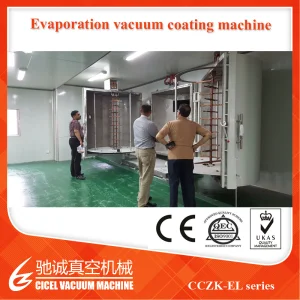
Beyond traditional luminaires, specialized industrial decorative coatings are essential to provide high-reflectivity finishes for automotive reflectors, plastic lighting housings, and cosmetic packaging. In industrial zones like Nizhny Novgorod and Togliatti, decorative components require high-uniformity vacuum metallization systems. Implementing high-vacuum physical vapor deposition (PVD) ensures that structural lighting brackets and interior reflective surfaces have a mirror-like finish that optimizes the light output of low-power LED systems, reducing overall power consumption.
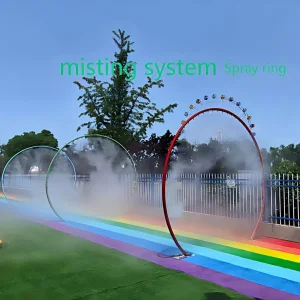
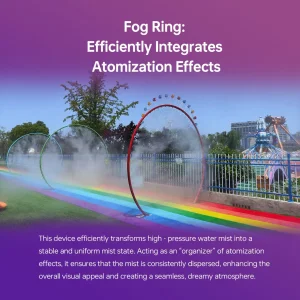
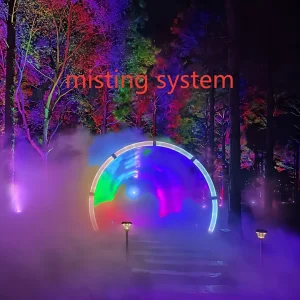
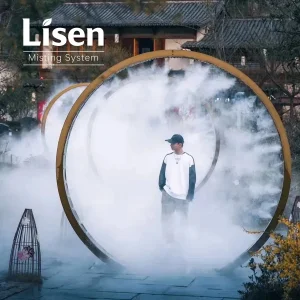
In regions such as Krasnodar Krai and the Southern Federal District, hot summer climates necessitate active cooling and humidity control in public spaces. The integration of high-pressure misting systems controlled by Programmable Logic Controllers (PLCs) with multi-zone LED drivers creates comfortable public oases. In these installations, the water pump controllers, solenoid valves, and LED illumination scripts are synchronized via Modbus or DMX, producing stunning mist-and-light animations during summer evenings while lowering ambient temperatures by up to 10°C.
As the decorative lighting market matures, several technical developments are set to reshape procurement priorities:
For Russian buyers, partnering with a manufacturer that proactively develops these technologies ensures that current infrastructure investments remain competitive and upgradeable for decades to come.
Addressing the critical engineering, logistics, and compliance questions of Russian lighting professionals.
We source industrial-grade semiconductors, solid-state capacitors, and specialized low-temperature quartz oscillators rated down to -40°C as standard. For extreme sub-zero installations, control boards are treated with high-durability hydrophobic conformal coatings to prevent condensation short-circuits. Enclosures are equipped with internal thermostat-controlled heating elements that maintain internal operating temperatures above 0°C, ensuring flawless boot cycles and operational stability.
For dynamic pixel-controlled façades and holiday displays, DMX512-A combined with RDM (Remote Device Management) over RS-485 physical layer is highly recommended due to its robustness. For very large installations exceeding 10,000 nodes, we recommend using Art-Net or sACN protocols to run the control signals over standard Ethernet fiber networks to local DMX decoders, ensuring zero signal latency across long distances.
Yes, our ODM services include custom mechanical tooling. We can design and manufacture bespoke mounting brackets, custom-profile aluminum extrusions, and special paint colors (RAL match) with highly weather-resistant powder coatings to seamlessly blend into historical facades, modern concrete structures, or park landscaping.
Our manufacturing processes integrate state-of-the-art EMI filter circuits and ferrite cores into our controllers and power systems. This limits conducted and radiated electromagnetic interference, ensuring our equipment passes all rigorous EAC and GOST-R compliance tests without interfering with local radio networks or cellular towers.
Integratable subsystems designed to build comprehensive, interactive municipal environments.